
Industrial Diecasting Manufacturer Guide: From R&D to Mass Production in 2026
Updated: Jul 24
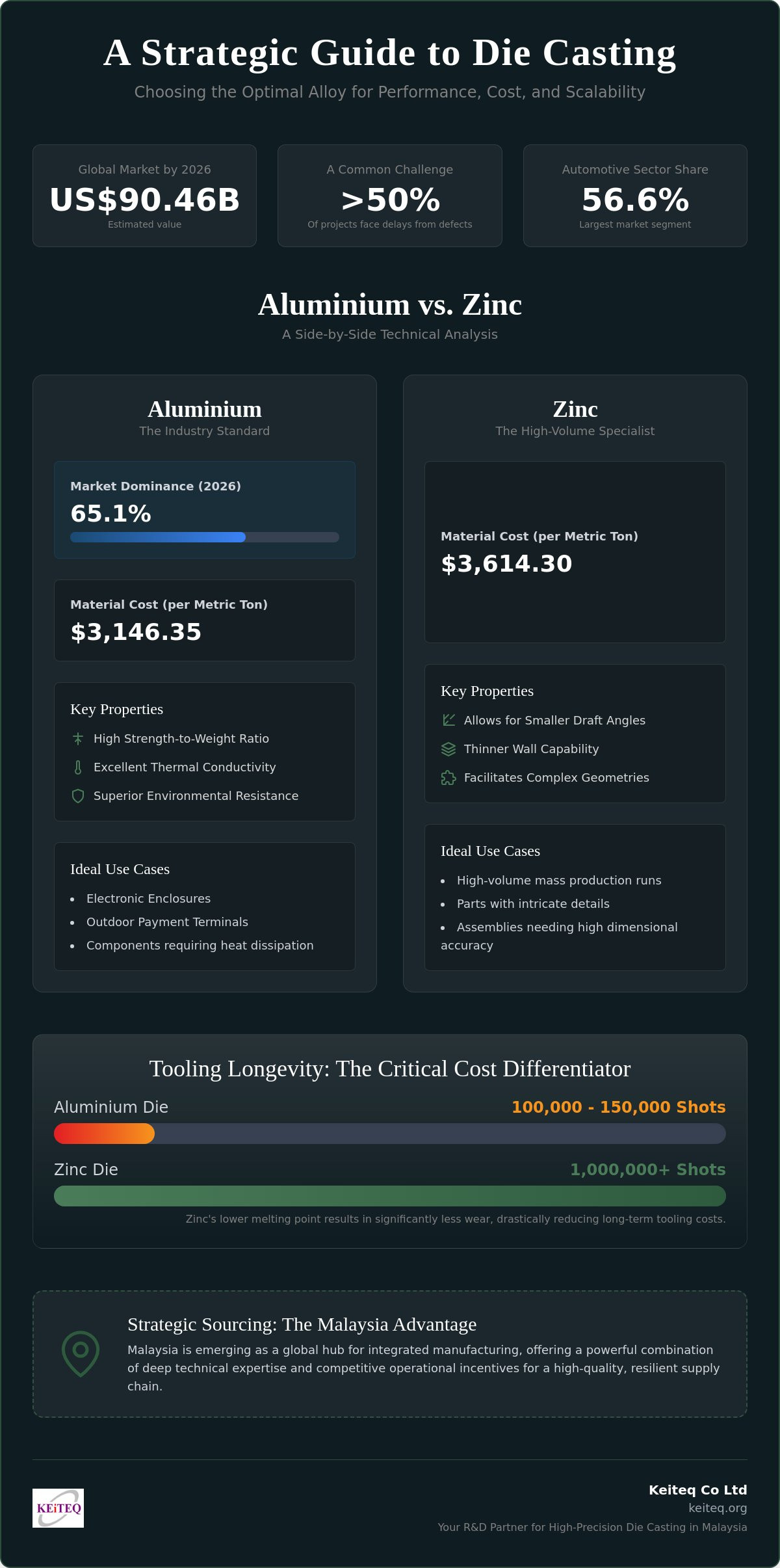
The global die casting market is estimated to reach US$90.46 billion in 2026, yet over half of industrial projects face delays due to porosity defects and unmanageable tooling costs. Finding a reliable diecasting manufacturer is no longer just a procurement task; it's a strategic engineering decision that dictates your product's speed to market. You've likely experienced the frustration of a design that works in a simulation but fails during mass production because the manufacturer lacks integrated finishing or design-for-manufacturability expertise.
This guide offers a comprehensive framework to help you evaluate partners, optimize material selection, and bridge the gap between R&D and the factory floor. We'll examine the technical differences between aluminum and zinc, analyze how 2026 market prices like the US$3,146.35 per metric ton for aluminum impact your bottom line, and detail the transition to high-volume assembly. You'll gain the insights needed to manage end-to-end production while leveraging regional advantages like Malaysia's New Incentive Framework to maintain a competitive, high-quality supply chain.
Table of Contents
What is a Diecasting Manufacturer and Why is the Role Evolving?
Modern diecasting is a high-precision metal forming process where molten metal is injected into steel molds under extreme pressure. While the foundational Die casting process remains rooted in physics, the role of a diecasting manufacturer has shifted significantly. In 2026, the industry has transitioned from being a simple component supplier to a strategic, integrated R&D partner. This evolution is driven by the need for tighter tolerances and more complex geometries in sectors like automotive, which is projected to hold 56.6% of the market share this year.
Leading manufacturers now intervene early in the product lifecycle to reduce time-to-market. By aligning engineering goals with production realities, they help procurement teams avoid the "design-manufacture gap" that often leads to costly revisions. This is particularly critical for outdoor electronics and fuel retail equipment, such as outdoor payment terminals for gas stations, where environmental durability and structural integrity are non-negotiable. A modern partner doesn't just execute a drawing; they optimize the design for the reality of the factory floor.
The Strategic Importance of High-Pressure Diecasting
Diecasting stands as the gold standard for high-volume production because it achieves near-net shapes with minimal secondary machining. This efficiency lowers the total cost of ownership for complex mechanical assemblies. The process maintains tight tolerances across thousands of cycles, ensuring that every part fits perfectly within a larger system. For engineers, this means achieving physical durability without the weight penalties of traditional casting methods. This scalability is essential for industries moving toward lightweighting, such as the electric vehicle sector, where every gram of saved weight translates to improved range and performance.
The Manufacturer as a Design Partner
A sophisticated manufacturer identifies potential design flaws before the expensive tooling phase begins. Integrating product R&D and manufacturing ensures that the part geometry is optimized for the flow of molten alloy. This collaboration often starts with prototyping to validate cooling rates and structural stress points. By utilizing soft tooling or simulation-led design, a diecasting manufacturer can verify designs before committing to multi-cavity steel dies. This proactive approach eliminates porosity risks and ensures a higher yield during mass production. It's a "Safe Pair of Hands" methodology that prioritizes logistical competence and technical accuracy over experimental guesswork.
Aluminium vs. Zinc: Selecting the Right Alloy for Your Project
Selecting the correct alloy is a foundational engineering decision that affects weight, durability, and total production cost. In July 2026, aluminum prices stand at US$3,146.35 per metric ton, while zinc is priced at US$3,614.30. Although zinc has a higher material cost per ton, its impact on tool life and manufacturing efficiency often offsets the initial expense. According to the North American Die Casting Association, zinc alloys allow for smaller draft angles and thinner walls than aluminum, facilitating more complex geometries. Your chosen aluminium diecasting manufacturer must balance these material properties against the functional requirements of the end product.
Tooling longevity represents a major cost differentiator. Zinc dies can often produce over one million shots before requiring significant maintenance. In contrast, aluminum dies typically last between 100,000 and 150,000 shots due to the higher melting point of the alloy. For high-volume mass production, the reduced frequency of tool replacement makes zinc a viable competitor despite the raw material price gap. If you're unsure which alloy fits your structural needs, you can consult with our engineering team for a technical review.
When to Choose Aluminium Diecasting
Aluminium is the dominant material in the industry, expected to account for 65.1% of the market share in 2026. Its primary advantage lies in its high strength-to-weight ratio and excellent thermal conductivity. These properties are essential for electronic enclosures that require heat dissipation, such as outdoor payment terminal housings. Aluminium also offers superior environmental resistance for outdoor hardware applications, maintaining structural integrity even in harsh climates.
The Advantages of Zinc Diecasting
Zinc excels when precision and surface finish are the top priorities. It's the ideal choice for intricate, thin-walled components that require tight tolerances. Because zinc has a lower melting point, it allows for faster cycle times and reduces thermal stress on the molds. When reviewing zinc diecasting services, engineers often focus on high-aesthetic parts that require specialized coatings. A qualified diecasting manufacturer will recommend zinc for parts where dimensional stability is paramount.
This dimensional stability is a cornerstone for high-security components; for example, you can discover Ay Kilit to learn more about their precision-engineered master key and padlock systems, produced by a manufacturer with expertise dating back to 1964.
The Diecasting Lifecycle: From Design to Mass Production
Production efficiency is won or lost in the initial design phase. A professional diecasting manufacturer treats the manufacturing lifecycle as a single, continuous workflow rather than a series of disconnected events. This integrated approach prevents the "silo effect," where design decisions made in isolation lead to poor production yields or high scrap rates. As highlighted in the North American Die Casting Association FAQ, technical choices regarding gate placement, wall thickness, and cooling channels at the R&D stage determine the long-term economic viability of the project.
Managing this lifecycle requires a deep understanding of how metal behaves under high pressure. It isn't enough to simply cast a part; the manufacturer must account for shrinkage, thermal stress, and the eventual assembly requirements. For complex industrial projects, this often involves integrating precision metal stamping with diecast components to create robust, multi-material assemblies. Consolidating these processes under one partner ensures that stamped inserts or internal brackets fit the diecast housing with absolute precision every time.
Prototyping and Soft Tooling
Committing to permanent steel dies is a significant capital investment. Developing a functional prototype allows engineering teams to validate mechanical performance and fitment before finalizing the tool design. Soft tooling serves as a cost-effective bridge during R&D, providing parts that closely mimic the properties of mass-produced units. This phase is critical for identifying potential interference issues or structural weaknesses that software simulations might overlook. Once the design is physically validated, the data is transitioned into high-precision production molds engineered for longevity and high-volume repeatability.
Quality Control in High-Volume Casting
Maintaining consistency across 100,000 units requires rigorous, data-driven process monitoring. Quality control begins at the machine level, where real-time sensors track injection pressure and molten metal temperature to prevent porosity and structural density defects. Supporting this precision often involves maintaining the health of the machinery's hydraulic fluids through specialists like BioKem Oil Services. A reliable partner manages the technical synergy between oem metal stamping services and the casting floor to maintain tight tolerances across the entire assembly. This methodical oversight ensures that every component meets ISO-certified standards, providing the functional trust required for critical industrial and automotive applications.
Advanced Surface Finishing for Industrial Diecast Parts
Raw diecast components are rarely field-ready upon exiting the mold. A professional diecasting manufacturer understands that the surface finish is just as critical as the internal structural density. Raw aluminum and zinc are susceptible to oxidation and environmental degradation if left untreated. Industrial finishing acts as a functional barrier, ensuring the longevity and reliability of the part in its intended application. It's the final step in bridging the gap between a raw casting and a durable industrial product.
Specialized treatments like enamel and ceramic coatings provide superior protection compared to standard liquid paints. Enamel coating creates a high-durability, glass-like surface that resists chemical solvents and extreme weather. Ceramic coating is the preferred solution for high-heat and high-wear scenarios, offering exceptional surface hardness. For high-volume projects where cost-efficiency is a priority, powder coating remains a versatile option for balancing aesthetics with reliable protection. Each choice impacts the part's performance and total lifecycle cost.
Protecting Outdoor Electronics and Terminals
Outdoor hardware faces relentless environmental stressors, including UV radiation and corrosive salt spray. This is particularly true for fuel retail equipment like petrol station payment kiosks. Implementing protective coatings for outdoor electronics is a standard requirement to prevent premature housing failure. These finishes ensure that the diecast enclosures meet the 1,000-hour salt-spray resistance standards often required by global procurement teams. It's a strategic investment that extends the product lifecycle and reduces maintenance costs in the field.
Aesthetic and Functional Finishing Choices
Finishing isn't solely about protection; it's also about achieving specific mechanical properties and brand requirements. Specialized ceramic treatments significantly improve surface hardness, making parts resistant to abrasion and impact. While powder coating allows for a wide range of brand-aligned colors and textures, enamel offers a level of durability that standard coatings can't match. Choosing the right finish depends on the balance between aesthetic needs and the severity of the operational environment. If you need a technical assessment of which coating suits your specific assembly, you can contact our finishing specialists for a consultation.
Strategic Sourcing: Partnering with a Manufacturer in Malaysia
Malaysia has solidified its position as a primary hub for global supply chains in 2026. This growth is accelerated by the New Incentive Framework (NIF) implemented on March 1, 2026, which rewards high-value manufacturing and technology transfer. For procurement teams, selecting a Malaysia-based diecasting manufacturer offers a strategic balance between cost-efficiency and technical precision. The region's infrastructure supports complex industrial requirements, moving beyond simple component production to offer sophisticated electronic manufacturing services in Malaysia alongside traditional metal forming. This proximity to diverse engineering talent and raw material routes reduces logistical friction for international OEMs.
The manufacturing sector in Malaysia no longer competes solely on labor costs; it competes on logistical competence and technical depth. Strategic sourcing in this region allows companies to leverage the Special Tax Rate (STR) or Investment Tax Allowance (ITA) introduced under the NIF. These incentives encourage local partners to invest in advanced automation and sustainable processes. By partnering with a regional expert, you gain access to a "Safe Pair of Hands" capable of navigating international compliance standards while maintaining high-volume output. This is particularly advantageous for industries like fuel retail and automotive, where precision and durability are mandatory.
The Integrated Manufacturing Advantage
Modern production demands a holistic approach to reduce lead times and eliminate multi-vendor logistics. An integrated partner provides diecasting, metal stamping, and plastic injection mold Malaysia services under one roof. This consolidation streamlines the single-source manufacturing benefits by ensuring that metal housings and plastic internal components are designed for perfect fitment. Managing these processes through a single entity reduces communication errors and accelerates the transition from design to mass production. It's an efficient methodology that prioritizes project stability over fragmented vendor management.
Evaluating a Malaysian Manufacturing Partner
When vetting a partner, you must look beyond their casting capacity. A reliable plastic injection molding services in Malaysia provider should also demonstrate expertise in full assembly and specialized finishing. Verify their ability to handle complex assemblies, such as outdoor payment terminals, which require integrated R&D and advanced coating facilities for enamel or ceramic treatments. A partner's technical depth in prototyping and soft tooling is a strong indicator of their ability to manage the full product lifecycle. Ensure they hold current ISO certifications and possess the scale to manage mass production without compromising on zero-defect quality standards.
If you're looking to optimize your industrial supply chain with high-precision diecasting and integrated assembly in Malaysia, we're ready to assist. Request to contact us for further details regarding our regional manufacturing capabilities or Request for Quotation to begin your 2026 production planning.
Future-Proofing Your Industrial Production for 2026
Selecting a diecasting manufacturer is a high-stakes decision that directly impacts your product's durability and market competitiveness. We've explored how early R&D involvement, precise alloy selection, and advanced surface finishing like enamel or ceramic coatings create the foundation for industrial success. In a global market where precision and logistical competence are paramount, having a partner to manage the transition from prototyping to high-volume assembly is essential. Success requires a steady hand and a commitment to methodical quality control.
Our ISO 9001:2015 compliant processes and specialized expertise in outdoor payment terminal assembly ensure that your complex hardware meets the highest standards for performance and longevity. By leveraging Malaysia's strategic manufacturing advantages, you can streamline your supply chain and achieve end-to-end R&D to mass production goals with confidence. We're ready to help you navigate the complexities of modern industrial production through a disciplined and results-oriented approach.
For expert manufacturing solutions in Malaysia, Request for Quotation or a Request to contact us for further details. We look forward to helping you achieve your production milestones with technical precision and reliability.
Frequently Asked Questions
What is the typical lead time for diecasting tooling?
Typical lead times for production-grade steel dies range from 8 to 12 weeks. Soft tooling for prototype development can often be delivered in 2 to 4 weeks to facilitate early R&D testing. Complex multi-cavity dies required for high-volume mass production may take longer due to the precision machining and heat treatment necessary for tool longevity. Accurate scheduling during the procurement phase is vital to avoid delays in the product launch.
How does a diecasting manufacturer control for porosity in aluminium parts?
A professional diecasting manufacturer controls porosity through optimized gate design, vacuum-assisted casting, and real-time process monitoring. Software simulations identify air entrapment points before the tool is built. During production, maintaining consistent injection speeds and metal temperatures prevents gas porosity. Post-production inspections, including X-ray testing, verify the structural density of the aluminium components to ensure they meet the rigorous safety standards required for industrial applications.
Is zinc diecasting more expensive than aluminium?
Zinc has a higher raw material price per ton but often results in a lower total cost of ownership due to extended tool life. In July 2026, zinc is priced at US$3,614.30 per metric ton compared to US$3,146.35 for aluminium. However, zinc dies can last over one million cycles, whereas aluminium dies typically require replacement after 150,000 shots. Zinc's ability to form thinner walls also reduces the material volume required per component.
Can diecasting manufacturers handle both low and high volume production?
Most manufacturers prioritize high-volume mass production, but they use soft tooling to bridge the gap for low-volume R&D needs. Diecasting is an economy-of-scale process where the high initial tooling investment is amortized over thousands of units. A versatile diecasting manufacturer provides prototyping services to validate designs before committing to permanent steel dies. Once the design is finalized, the workflow transitions into high-volume management to ensure consistency across 100,000 units or more.
What certifications should I look for in a diecasting manufacturer in 2026?
ISO 9001:2015 remains the baseline standard for quality management, but you should also verify compliance with IATF 16949 for automotive projects. In 2026, ISO 14001 for environmental management is increasingly important for meeting global sustainability targets. These certifications prove the partner follows disciplined quality control and procedural accuracy. Checking for these credentials ensures you're partnering with a "Safe Pair of Hands" that understands the complexities of international production and compliance.
What are the benefits of enamel coating for outdoor metal components?
Enamel coating provides a glass-like barrier that offers extreme resistance to UV radiation, salt spray, and chemical solvents. This finish is essential for outdoor payment terminals at petrol stations where exposure to harsh weather and fuel vapors is constant. Unlike standard powder coatings, enamel won't degrade under intense sunlight or corrode in coastal environments. It significantly improves the physical durability and aesthetic longevity of diecast housings, extending the product's functional lifespan in the field.


Comments